Published in the latest issue of Joule, a leading global journal in energy science
Joint research by SAMSUNG SDI’s Korea R&D Center, SDI R&D America (SDIRA), and Columbia University finds way to improve lifespan and safety, advancing commercialization of next-generation batteries
SAMSUNG SDI will continue to accelerate the development of next-generation battery technologies based on our global research network
SAMSUNG SDI today announced that it has developed a new electrolyte formulation that improves both lifespan and safety of lithium-l batteries. The breakthrough was achieved through a joint research project involving the company’s domestic research center, SDI R&D America (SDIRA), and Columbia University.
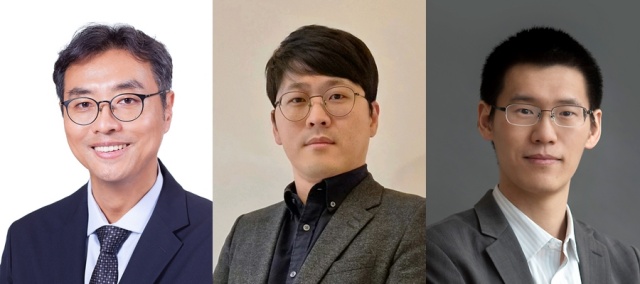
[(From left) Seung Woo Lee, Executive Vice President of SAMSUNG SDI's R&D Center, Yong Seok Kim, Head of SDI R&D America (SDIRA), Professor Yuan Yang of Columbia University]
The findings were published in Joule, one of the world’s leading journals in energy science. The paper was co-authored by Seung Woo Lee, Executive Vice President of SAMSUNG SDI’s R&D Center; Hyun Sik Woo, researcher at the R&D Center; Yong Seok Kim, Head of SDI R&D America (SDIRA); SDIRA researchers Yang Li and Yuanyuan Ma; and Professor Yuan Yang of Columbia University.
The study, which focuses on lithium-l batteries, is attracting significant attention from both academia and industry as it introduces a novel approach to overcoming key challenges in next-generation battery technology.
Lithium‑l batteries offer the highest energy density among existing battery technologies, delivering more than 1.6 times the energy density of conventional NCA lithium‑ion batteries. However, commercialization has been constrained by a limited charge-discharge lifespan, which has typically been restricted to only several dozen cycles.
The research team significantly improved the lifespan and safety of lithium-l batteries by applying a gel polymer electrolyte. By developing a fluorine-based gel polymer electrolyte that forms a stable interphase on the anode surface, the team effectively suppressed dendrite formation, a key factor that has long degraded the performance of lithium-l batteries.
The study is notable for bringing together SAMSUNG SDI’s domestic and overseas research centers in collaboration with Columbia University, one of the world’s leading universities. It is regarded as a global industry–academia partnership combining the company’s R&D capabilities with the university’s academic expertise.
If commercialized, lithium-l batteries are expected to overcome the limitations of existing battery technologies. They could also support advancements in industries that require high energy density, such as next-generation wearable devices.
“The publication in Joule provides academic validation of our technology that improves the safety of lithium-l batteries, which had long been considered a key weakness,” said Yong Lak Joo, Executive Vice President and Head of the R&D Center. “We will continue to accelerate the development of next-generation battery technologies based on our global research network.”
“This study represents a major improvement in lithium-l battery performance through a new electrolyte formulation and brings commercialization of next-generation batteries one step closer,” said Professor Yuan Yang of Columbia University.


